
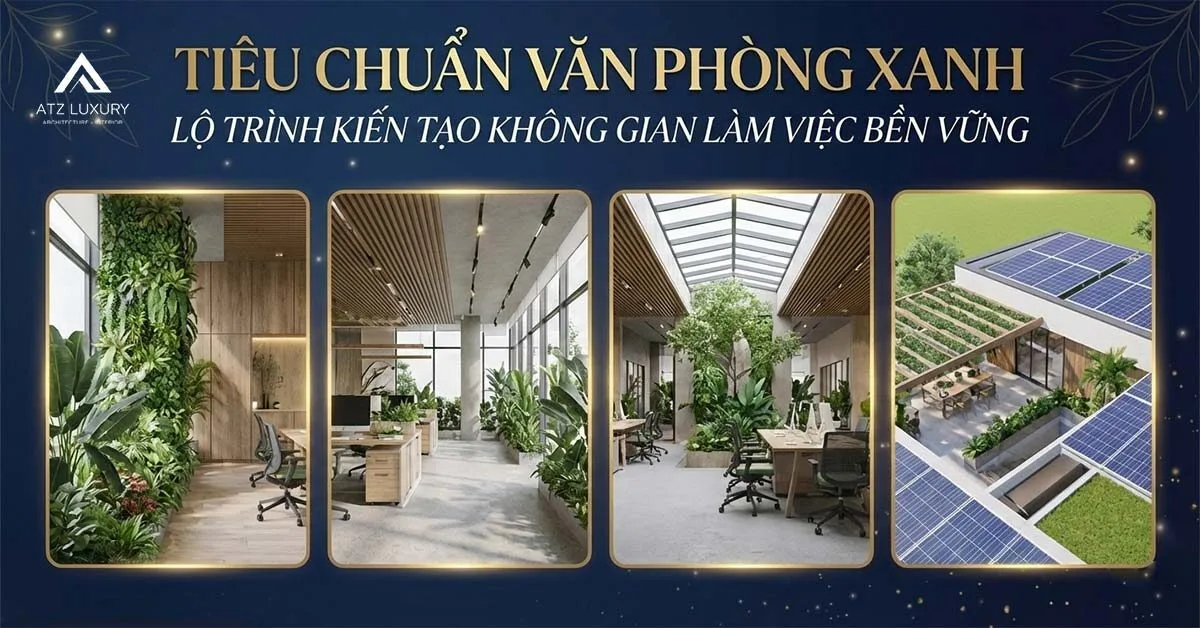
As the global economy shifts decisively toward sustainable growth models (ESG), the office is no longer merely a place to arrange desks and chairs. Closed-off concrete blocks, harsh fluorescent lighting, and stifling atmospheres—the primary triggers of Sick Building Syndrome (SBS)—are becoming significant barriers to corporate growth. To survive and thrive, leaders must view the workspace as an “ecosystem” that nurtures creativity and protects their most valuable asset: people. Implementing green office standards is a strategic solution that optimizes operating costs, increases asset value, and solidifies brand positioning on the international stage.
Green Offices: More Than Just “Adding Plants” to the Workspace
Many businesses mistakenly believe that placing a few potted plants on desks constitutes a “green office.” In reality, from a strategic consulting perspective, this is a rigorous and comprehensive operational management system. The concept was initiated by the World Wide Fund for Nature (WWF) in Finland in 1997 and officially standardized in 2002.
“A Green Office is an environmental management system that helps offices reduce greenhouse gas emissions directly in the workplace.” – According to the WWF Green Office definition.
At its core, green office standards function as an Environmental Management System (EMS). It intervenes deeply in both the physical structure of the building and human behavior to reduce energy consumption, resource use, and emissions. It is a synergy of smart architectural design, energy-saving technology, and a culture of corporate responsibility.
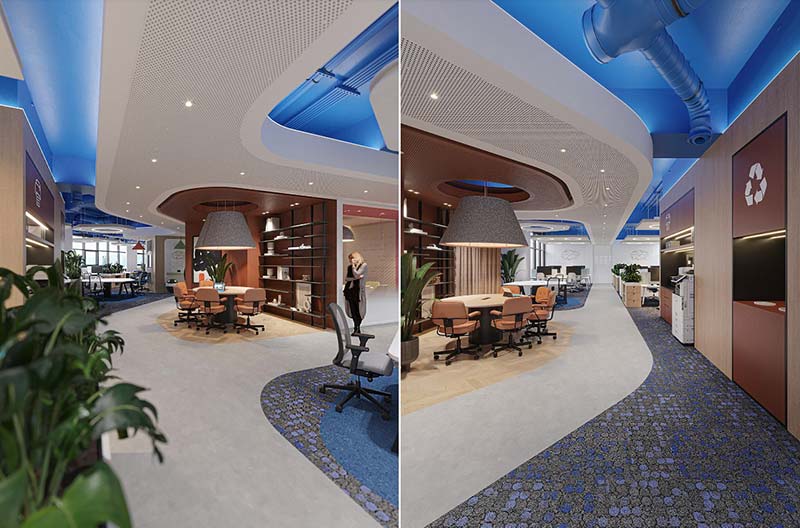
Don’t miss: beautiful and unique green office models trending today
Why Businesses Must Adopt Green Office Standards Today
Transitioning to a sustainable model is not an additional expense but an investment with a clear ROI (Return on Investment). It helps businesses manage risks against volatile energy prices and shifting expectations from the younger workforce.
Breakthroughs in Employee Health and Productivity
A workspace that complies with green office standards has a direct impact on human biological performance:
- Controlling SBS: Plants and standard air filtration systems help remove 40–50% of volatile organic compounds (VOCs) emitted by printers, photocopiers, and carpets. This contributes to a 14% reduction in sick leave.
- Psychological Stability and Stress Reduction: Research from the University of Illinois and Hong Kong confirms that looking at greenery or nature scenes for just 6–10 minutes stabilizes heart rates and reduces cortisol levels.
- Boosting Creative Intelligence: According to research by Dr. Virginia Lohr (Washington State University), employees in green environments see a 12% increase in productivity and a 15% boost in creativity due to higher concentration levels and reduced noise pollution.
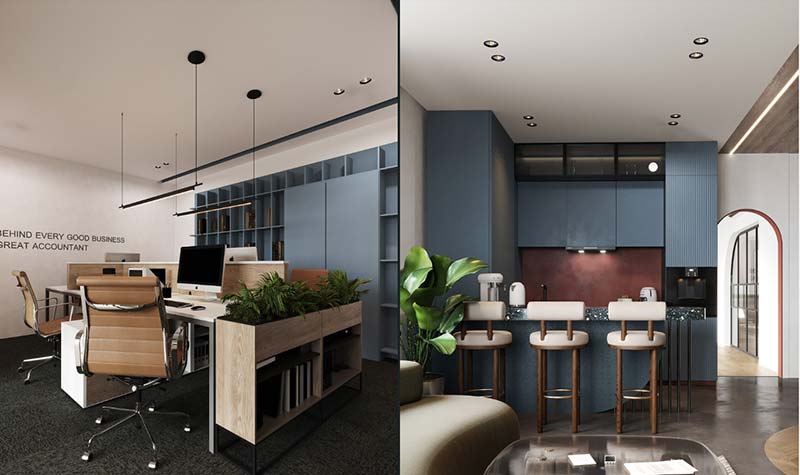
Optimizing Operating Costs and Long-term Brand Value
From an asset management perspective, a green office helps businesses with:
- De-risking (Energy Risk Mitigation): Leveraging natural light and smart ventilation can save up to 30% on electricity costs.
- Increasing Asset Value (Cap Rate): Buildings with green certifications typically command rental and resale values 10–20% higher than traditional structures.
- Attracting New Generation Talent: Gen Z and Millennials prioritize working for organizations with clear ESG commitments. A green office acts as a “magnet” for retaining top talent.
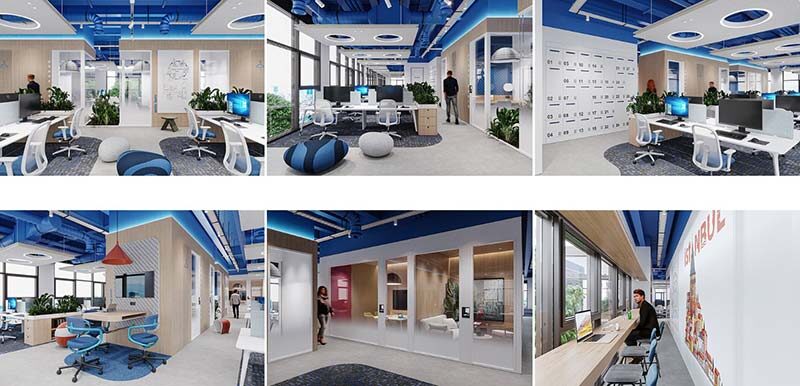
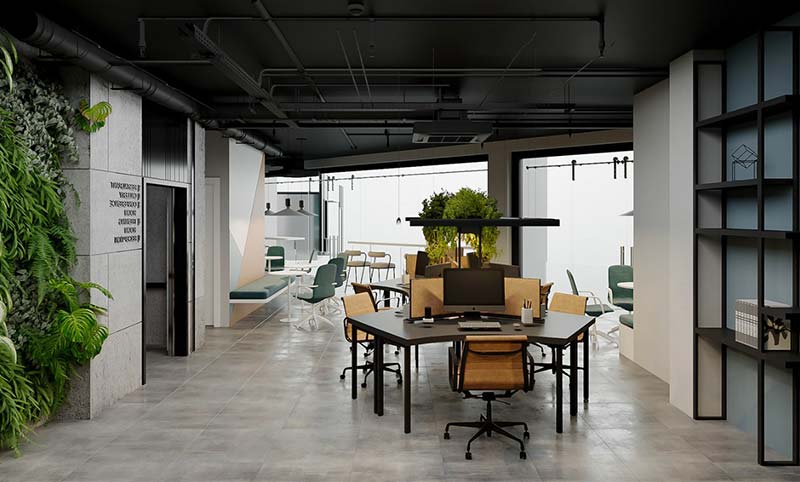
You may also refer to: Office Lighting Design Standards
Common Green Office Standards and Certifications in Vietnam
To quantify sustainability, businesses need reputable “yardsticks.” Currently, LEED and LOTUS are the two dominant systems in the Vietnamese market.
LEED International Certification System (USGBC)
LEED Certification (Leadership in Energy and Environmental Design) is a global standard developed by the U.S. Green Building Council. It serves as a “passport” for multinational corporations looking to assert international prestige. LEED focuses heavily on high-tech solutions and rigorous energy performance.
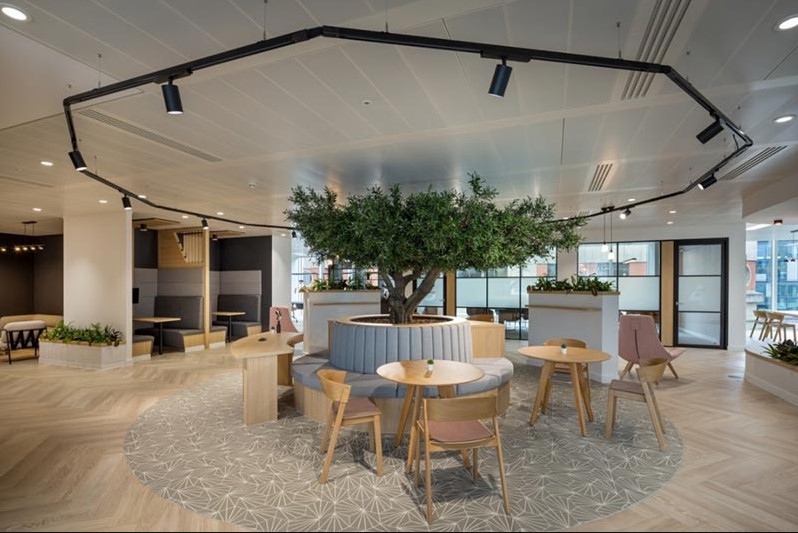
You might be interested in: Office Design According to LEED Standards
LOTUS Certification: The Optimal Green Standard for the Vietnamese Context
Developed by the Vietnam Green Building Council (VGBC), LOTUS is a system “tailor-made” for the hot and humid tropical climate and construction regulations in Vietnam. LOTUS encourages indigenous solutions, utilizing natural ventilation and local materials to optimize costs.
Strategic comparison between LEED and LOTUS:
| Criteria | LEED Certification (USGBC) | LOTUS Certification (VGBC) |
| Origin | USA – Globally recognized and the world’s most prestigious benchmark. | Vietnam – Developed by the Vietnam Green Building Council. |
| Core Priorities | International Standards: Focuses on energy performance according to ASHRAE and high-tech solutions. | Localization: Focuses on tropical climate adaptation, local materials, and strict compliance with TCVN. |
| Costs & Procedures | High. Registration/assessment fees in USD. Documentation requires full English translation. | Reasonable. Lower costs, payable in VND. Faster assessment process familiar to local contractors. |
| Rating Levels | Certified, Silver, Gold, Platinum. | Certified, Silver, Gold, Platinum. |
| Best Suited For | Multinational corporations, Grade A+ offices, iconic landmarks. | Domestic enterprises, locally funded projects, renovation works. |
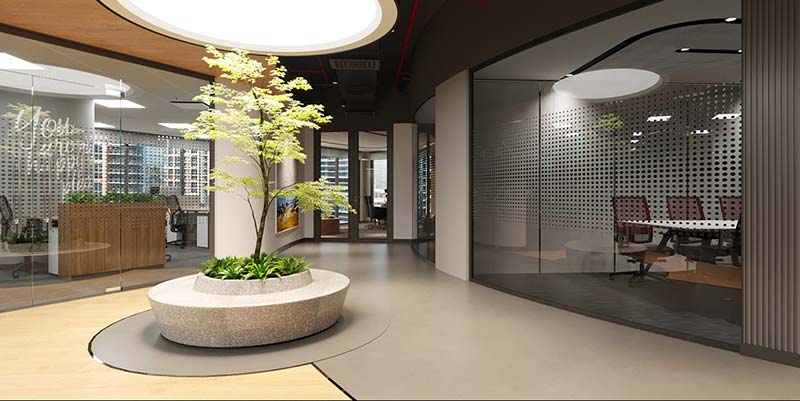
Check out: What are the pros and cons of a green office?
Core Design Standards for Achieving a Model Green Office
To realize a sustainable workspace, businesses must adhere to strict technical specifications according to TCVN and green building codes.
Optimizing Energy Efficiency and Natural Light
Energy is the key factor in cutting long-term operating costs.
1. OTTV Index: The Overall Thermal Transfer Value for walls (OTTV_T) must not exceed 60 W/m².
2. Building Envelope: The maximum thermal transmittance (U-value) for walls is 1.8 W/m²K. Specifically, flat roof structures must ensure a minimum total thermal resistance (R0.min) of no less than 1.00 m².K/W to prevent heat gain from the top of the building.
3. Lighting System: Lighting Power Density (LPD) must reach levels of
4. Natural Utilization: At least 50% of the floor area must be naturally lit, with a minimum window-to-wall ratio of 1:8.
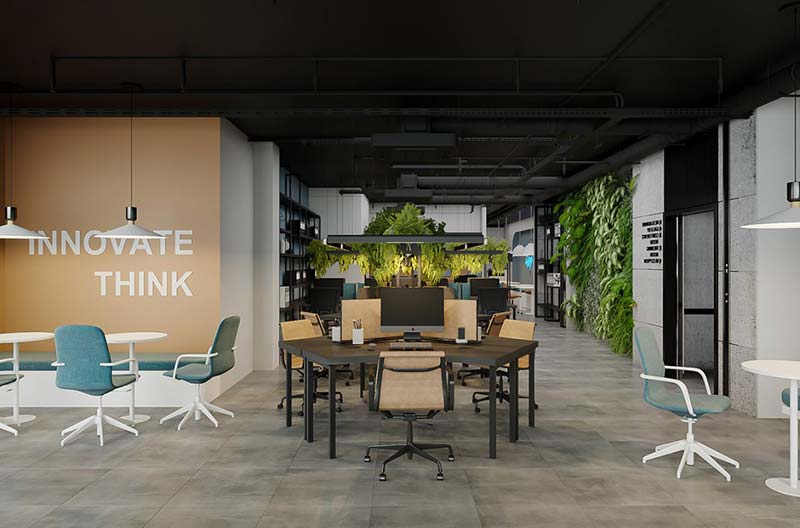
Water Resource Management and Sustainable Materials
1. Technical Water Saving: Install sanitary fixtures with low flow rates: standard faucets (0.14 L/s), showers (0.16 L/s). Rainwater harvesting systems should contribute at least 15% of the building’s water supply.
2. Materials and IEQ Quality: Prioritize non-fired materials (AAC), recycled materials (RCA), or FSC-certified wood. To ensure Indoor Environmental Quality (IEQ), all paints and adhesives must have low VOC content, contain no Formaldehyde, and maintain humidity below 60%.
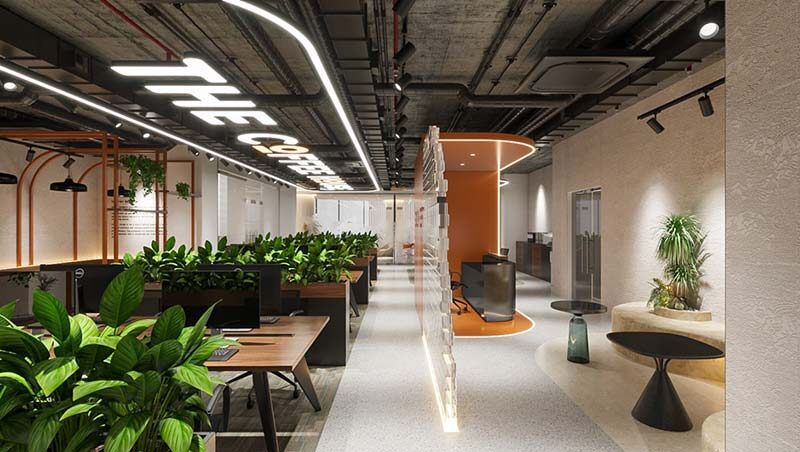
See more: Ideal Green Workspaces to Improve Performance
Offices Designed to Green Office Standards
AMAZON’s Green Office – Designed with an abundance of plants and natural light
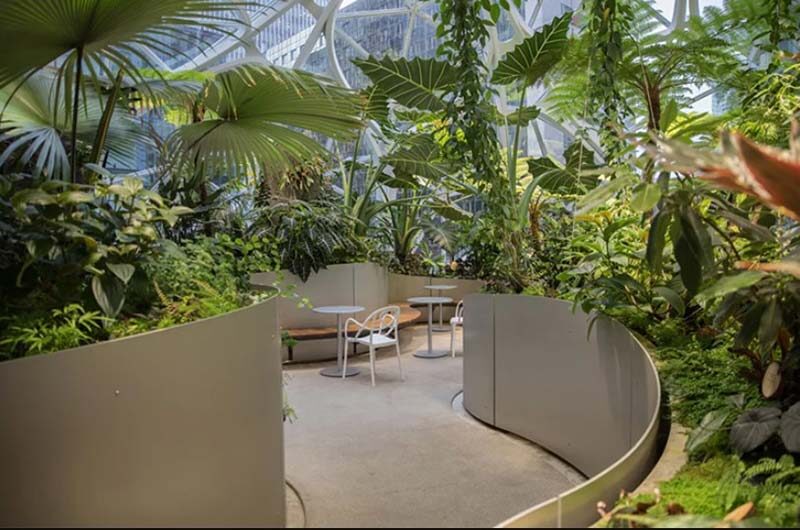
GOOGLE quickly embraced the trend – designing lush green office spaces combined with glass systems to capture natural light from above
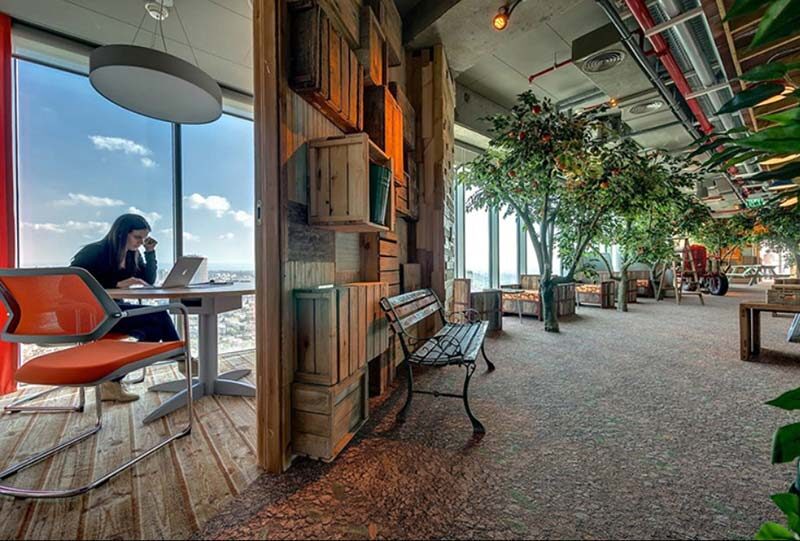
ALLEGRO’s green space (Finland) – maximizing natural light sources to achieve peak energy savings
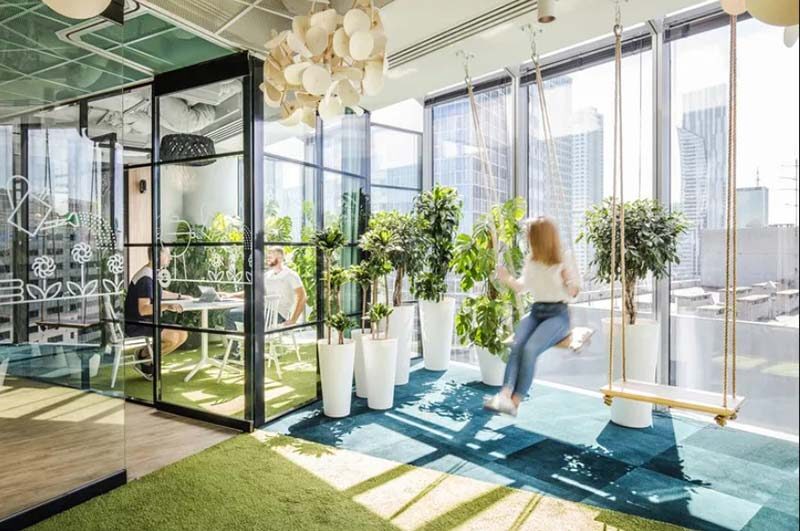
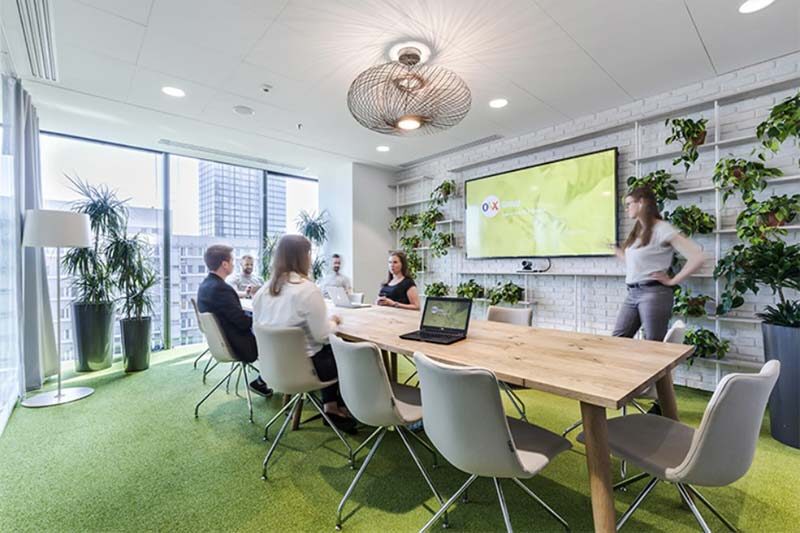
OLX’s office (Poland) – greenery is placed everywhere, creating a fresh, relaxing, and comfortable environment for employees
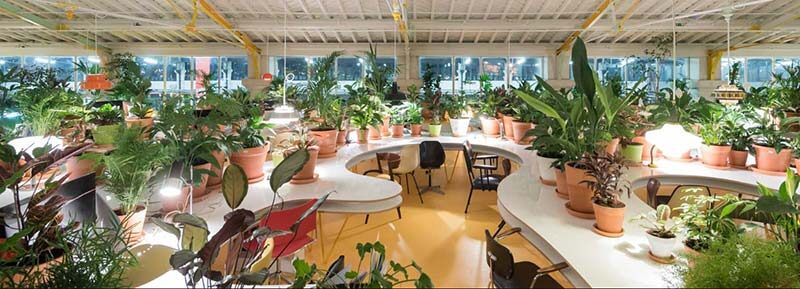
SECOND HOME’s workspace (Portugal) – the company focuses on sustainable green development, aiming for a relaxing space that minimizes noise for staff
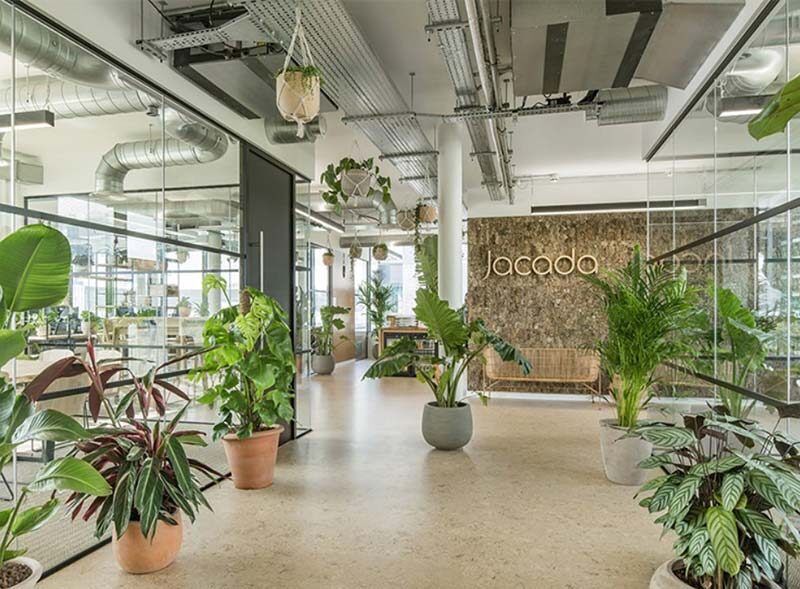
JACADA TRAVEL – a group with one of the most famous green offices, featuring a space that connects people, nature, and the individuals within the company
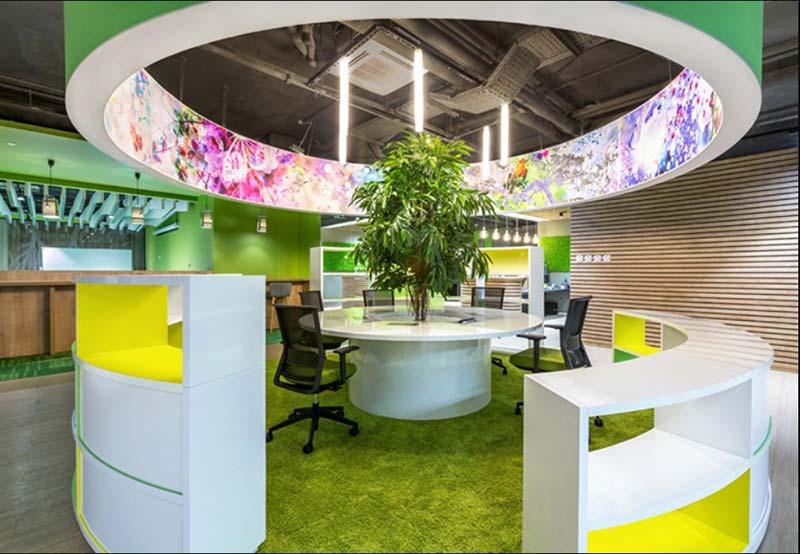
Office space at SBERBANK (Russia), where geometric shapes are integrated with greenery to create a unique and eye-catching green office
See more:
Conclusion: Is a Green Office a Luxury Investment?
If you only look at the initial investment cost (typically 2–5% higher), a green office might seem like a luxury. However, when analyzed through the lens of Life Cycle Cost, a 30% reduction in energy bills combined with a 14% drop in sick leave allows businesses to recoup their investment in a short period.
Green office standards are no longer a passing trend but a mandatory infrastructure for any visionary business. Technical specifications provide the skeleton, but a culture of sustainability is the soul of a green workspace. When the work environment transforms into a growth engine, businesses don’t just protect the planet—they strengthen their internal foundation for future leaps forward.
A question for executives: Is your office a resource-draining expense or a sustainable productivity engine? If you have any questions or need consultation on design and construction, contact ATZ LUXURY immediately via hotline: 0915.178.091 for a free consultation.
Thảo Phương – thietkenoithatatz.com
No comments yet!