
An office workspace directly impacts employee performance, creativity, and morale. A well-designed office is not just an efficient place to work—it is also the face of the business, playing a crucial role in attracting and retaining top talent. Therefore, understanding the key considerations when designing office interior spaces is a strategic investment in sustainable growth.
In this article, let ATZ LUXURY guide you through the essential factors to keep in mind when designing your ideal office space.
Scientific Space Allocation and Layout Planning
A logical layout is the foundation for optimizing functionality and ensuring smooth traffic flow throughout the office. A scientifically partitioned space helps employees work more efficiently, interact with ease, and minimize unnecessary distractions, thereby directly boosting overall operational performance.
- Ensure standard square footage: To provide employees with a comfortable working environment, minimum office space standards must be met. Current standards typically range from 5–6 sqm/person for basic setups and 7–10 sqm/person for offices requiring more breathing room.
- Choose appropriately sized furniture: Select desks, chairs, and storage units that scale proportionally with the total area. Avoid oversized furniture that makes the room feel cramped, or undersized pieces that waste space and fall short of functional needs.
- Maintain clear, unobstructed pathways: Walkways between areas and desk rows should be wide and unobstructed. This not only facilitates easy movement but also ensures safety and creates an open, airy atmosphere in the office.
- Divide functional zones logically: Departments should be strategically arranged. For instance, client-facing teams like Sales and Reception should be located near the entrance. Departments requiring deep focus, such as Accounting, IT, and R&D, should be placed in quiet zones away from main traffic routes. Conversely, noisy zones like server rooms or printing stations should be isolated to prevent disruptions to the general workspace.
Beyond the physical structure, the sensory environment shaped by lighting and color plays an equally vital role in shaping the employee experience.
Focusing on Lighting and Color
Lighting and color are two elements with a powerful impact on human vision, mood, and productivity. A space well-balanced in these two aspects helps reduce stress, enhance concentration, and spark creative inspiration.
Lighting
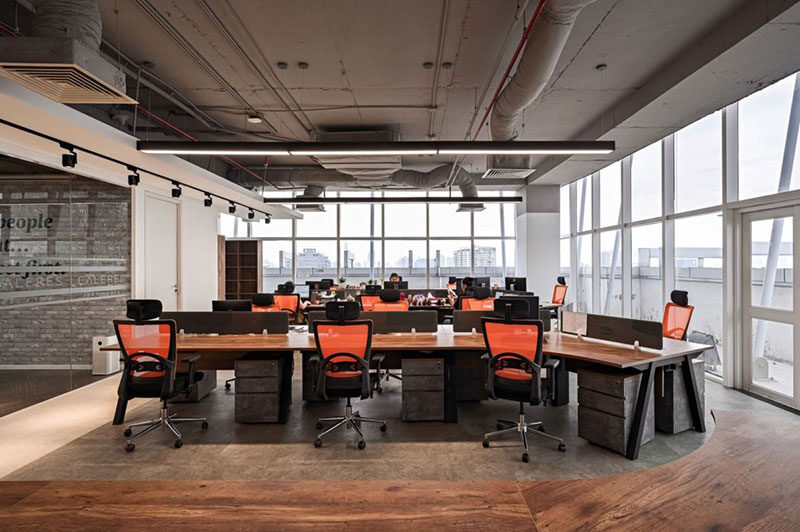
Poor lighting can cause various health issues such as eye strain and headaches, while diminishing concentration levels. Therefore, a quality lighting system is an absolute must. Ideally, design a harmonious blend of natural light—by maximizing windows—and artificial light from a well-planned fixture system. Key technical lighting standards for offices include:
- Illuminance: Light levels on work surfaces should exceed 400 lux to protect visual health and minimize eye fatigue.
- Color Rendering Index (CRI): Should range between 80–100Ra to render object colors as accurately as possible.
- Color Temperature: Prioritize white or neutral lighting (4500K – 6700K) to promote alertness and focus.
Color
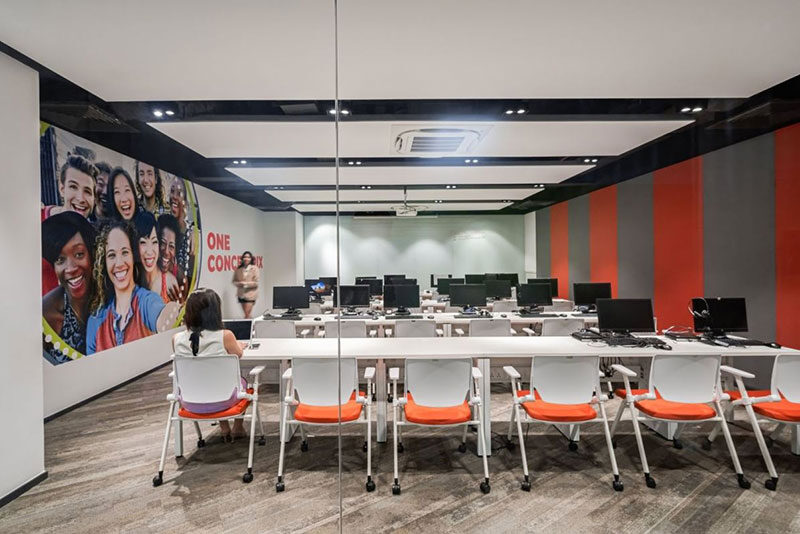
Color not only defines aesthetics but also serves as a strategic tool to reinforce corporate culture. Prioritize bright or neutral tones like white, beige, and light gray as your primary palette to create an expansive, professional feel. More importantly, skillfully weaving in brand colors goes beyond mere decoration—it transforms the physical space into an integral part of your brand identity, helping employees feel a stronger sense of belonging to the organization.
Much like lighting, the colors used to decorate an office are exceptionally important for regulating mood and boosting work morale. Learn more in our detailed article: Choosing Colors in Office Design to Boost Productivity & Creativity
Once the sensory environment is established, investing in direct work tools will safeguard the long-term health and comfort of your staff.
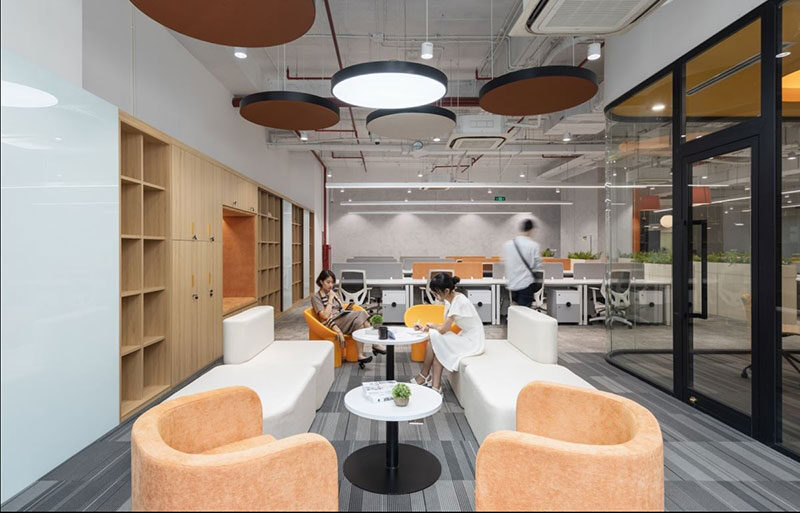
Investing in Ergonomic Furniture and Green Spaces
Employee health and well-being are core pillars for sustaining long-term productivity. Investing in a healthy work environment demonstrates a company’s genuine care for its people—a key factor in retaining talent.
Ergonomic Furniture (Ergonomics)
Office workers spend long hours seated, putting them at risk of spinal and musculoskeletal disorders. To combat this, ergonomic furniture is the ultimate solution.
- Ergonomic chairs: Rather than choosing chairs based solely on looks, prioritize models with adjustable features such as seat height, tilt tension, lumbar support, and armrests. This protects the lower back, neck, and shoulders while delivering maximum comfort.
- Height-adjustable desks (sit-stand desks): Sedentary lifestyles are among the biggest challenges of desk jobs. Sit-stand desks allow employees to effortlessly alternate between sitting and standing postures, improving blood circulation, relieving spinal pressure, and sharpening focus.
Green Spaces
Integrating indoor plants into the office yields outstanding benefits: purifying the air, reducing stress, and sparking creative inspiration. A few potted plants placed in corners, on desks, or atop bookshelves cultivate a fresh and pleasant working environment. Popular, low-maintenance choices include snake plants, pothos, and money plants, which are well-known for their air-purifying qualities. Alongside individual wellness, creating a balanced spatial structure fosters effective teamwork.
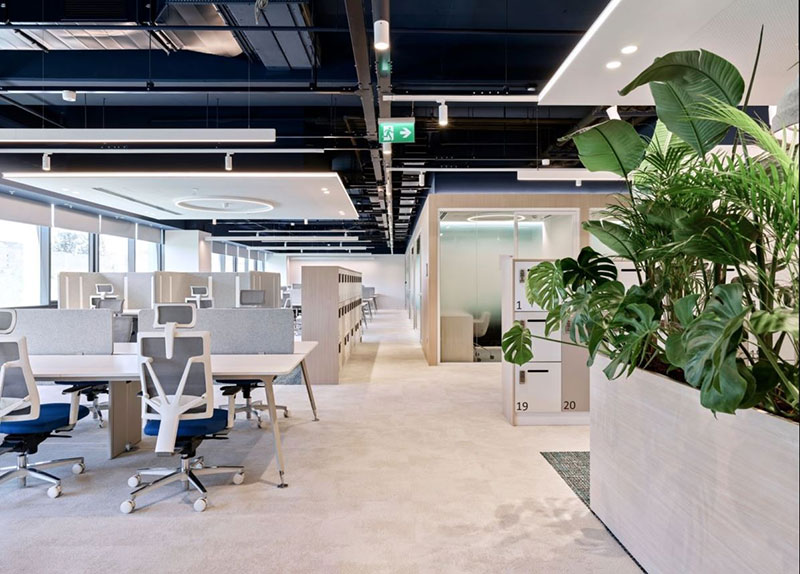
Balancing Shared and Private Spaces
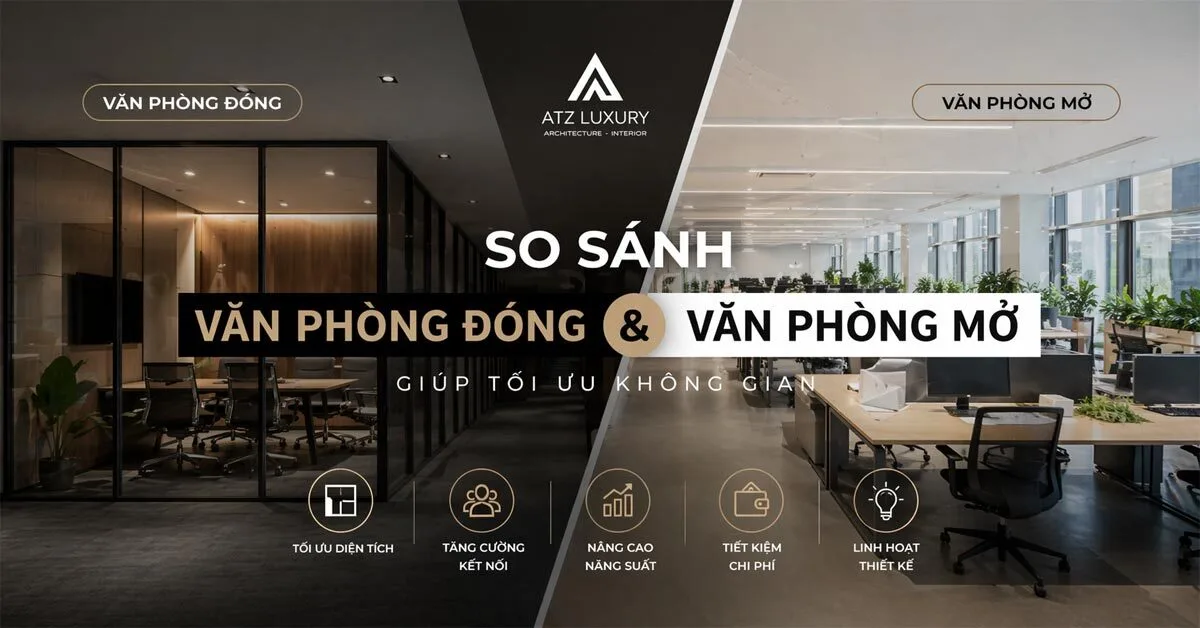
A modern office must strike a balance between two essential needs: collaborative interaction for innovation and focused solitude for task execution. Open-plan workspaces encourage communication and team cooperation, but a lack of private zones can easily lead to noise distractions. Conversely, an overly compartmentalized office hinders connection and team spirit.
To solve this, solutions such as glass partitions, half-height dividers, or dedicated quiet zones can be implemented. This grants employees private spaces to concentrate when needed while preserving overall connectivity. Such a balance ensures that both collaborative innovation and individual productivity are fully maximized.
Finally, alongside scientific principles, cultural considerations play an integral role in fostering a harmonious and prosperous work environment.
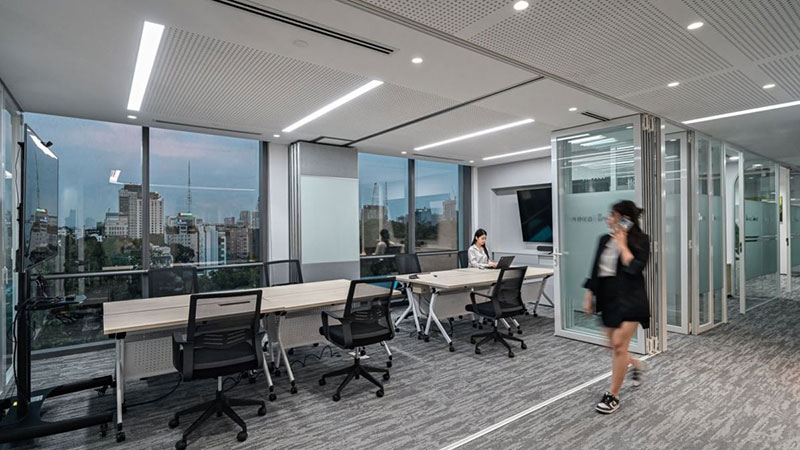
Don’t Overlook Feng Shui
In Eastern cultures, feng shui is an influential business practice believed to attract positive energy, prosperity, and smooth growth for enterprises. Applying office feng shui principles not only respects cultural traditions but also helps build a harmonious work environment that brings peace of mind to employees. When designing, you can incorporate several basic office feng shui principles:
- Avoid positioning desks in a direct line with or facing the main entrance.
- Ensure seating has solid support behind the back, such as a solid wall.
- Keep the central area of the office open and clear of major obstructions.
- Avoid sharp corners from columns, cabinet edges, or overhead ceiling beams pointing directly at seating positions.
- Use feng shui items like artwork, crystal spheres, or indoor plants to amplify positive energy.
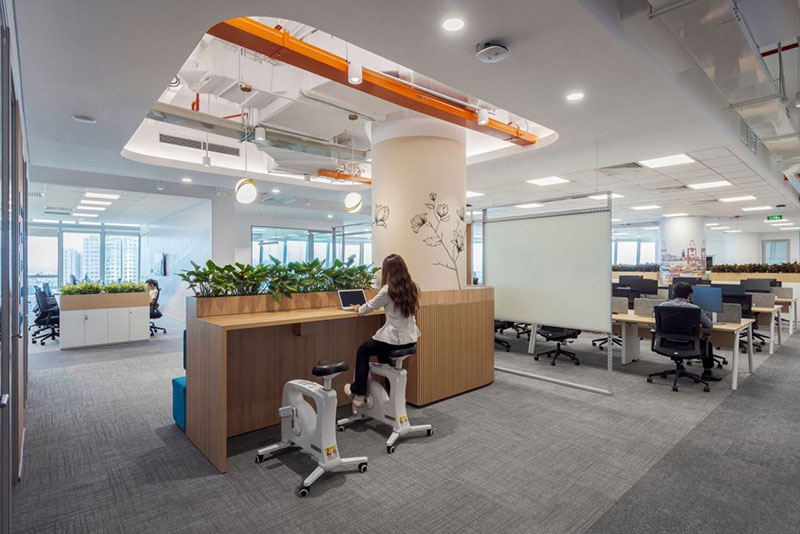
Investing in office interior design is a critical strategy that yields long-term benefits for a company’s growth. By properly applying these essential considerations when designing office interior spaces—from scientific layout planning, attentive lighting, and color selection to employee health and feng shui principles—you will create a work environment that is not only visually stunning but also highly efficient and inspiring.
What does your ideal workspace look like? Share your vision with us so we can help you build an inspiring and high-performing work environment together!
Contact ATZ LUXURY today for detailed consultations on our comprehensive office interior design and construction services!
| An office space designed right from the start not only optimizes work performance but also lays the foundation for a sustainable corporate culture. If you are looking for a scientific, aesthetic, and cost-effective office interior design and build solution, the team of architects at ATZ LUXURY is ready to accompany you from initial concept consultation to on-site execution. ???? Contact ATZ LUXURY today for in-depth advice and the best-suited solution for your business workspace. Hotline: Website: https://thietkenoithatatz.com/ |
See more:
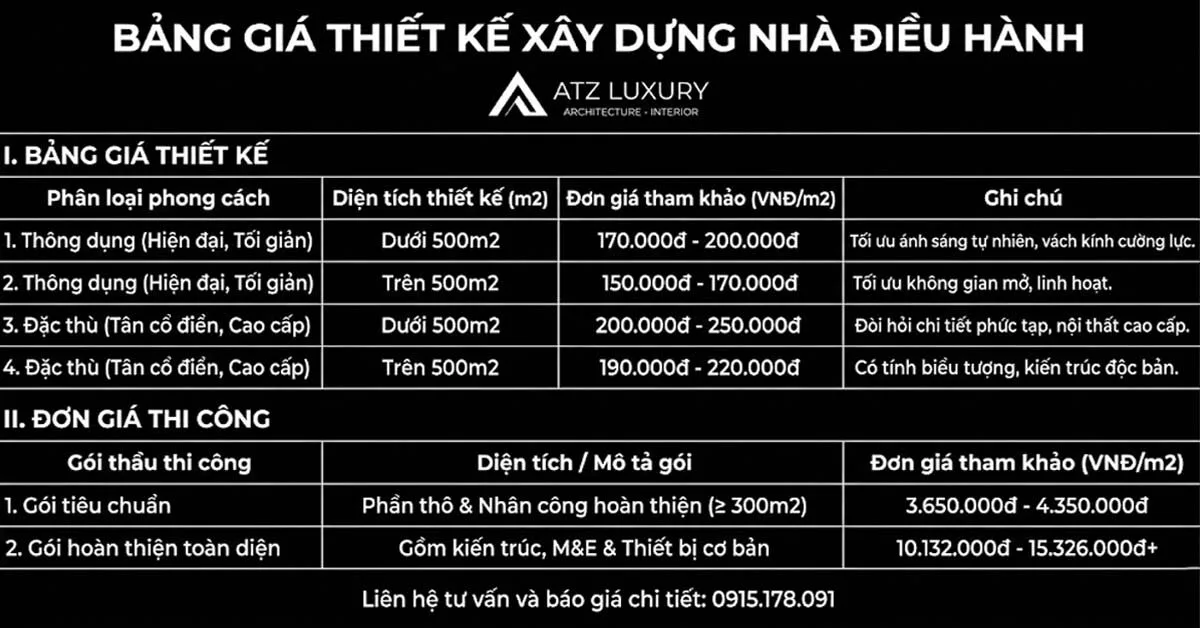
How Much Does Office Interior Design and Construction Cost?
Office Design Trends Shaping Modern Workspaces
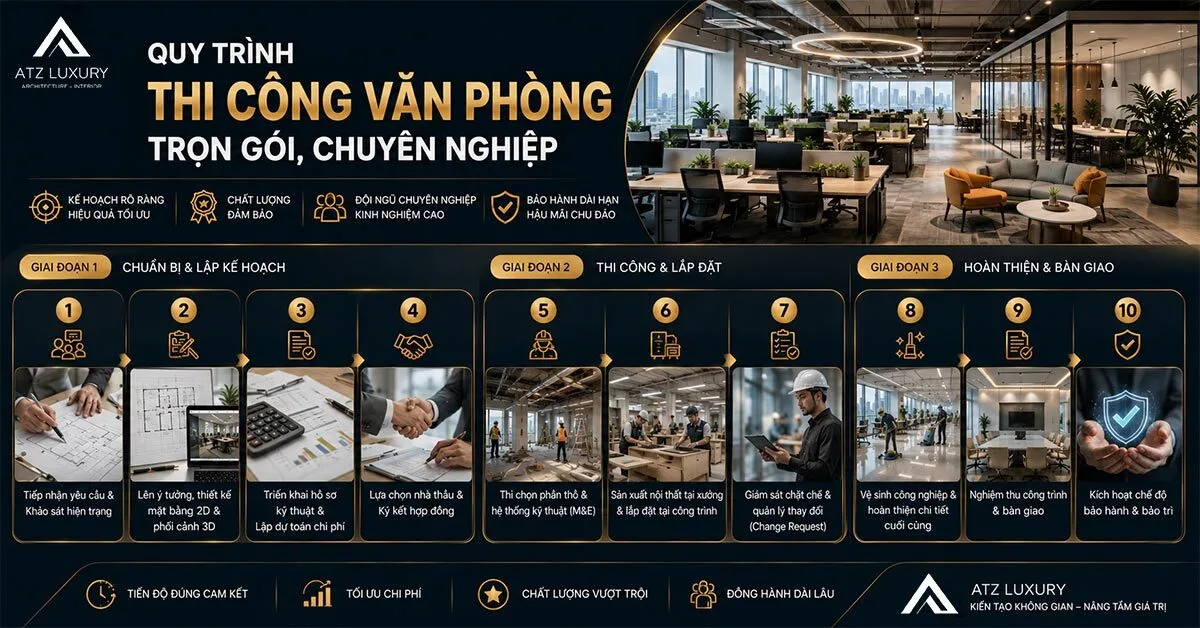
The Office Construction Process: From Site Survey to Handover
How to Arrange an Executive Office with Authority and Proper Feng Shui
Top 15+ Most Reputable Office Design and Construction Firms Today
No comments yet!